
HOME | POSTS | MAGNESIUM | LAB TEST
Can magnesium help Heart palpitations?
Magnesium is one of the essential minerals for the heart health, it helps control heart rhythm, vascular flexibility and also helps to control blood pressure. Magnesium also helps in heart palpitations (atrial fibrillation); it is a factor in inflammation reaction regulation and also lowers the risk of metabolic syndrome. The magnesium deficiency is also called hypomagnesemia, can cause abnormal heart rhythm, fatigue and muscle cramps. Severe deficiency is dangerous as it can cause seizures, abnormal calcium levels and changes to the heart (healthdirect)
Around 20.5 million people die each year from heart and coronary artery disease according to WHO. In USA alone the death toll is 0.94 million in 2026 according to WHO, the heart and related cardiovascular diseases are a leading cause of death worldwide.
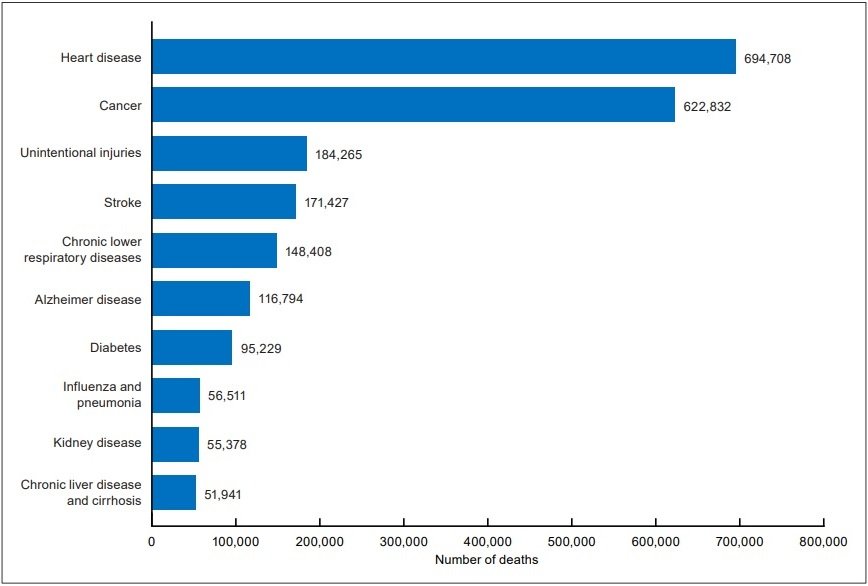
The figure above shows the leading cause of death in US is because of heart disease, it is of year 2025 in a report of CDC, USA.
Does magnesium help your heart?
According to a research (Pubmed), magnesium performs five main functions which may help the heart and cardiovascular system. Magnesium may help in regulating heart palpitations, activates heart responsiveness and also balances the electric impluses.
How Magnesium Helps heart?
- Heart Rhythm: Stabilizes electrical signals to heart to control abnormal heart rate
- Heart Contraction: Balances calcium in the heart muscles to help heart contract and retract efficiently
- Electrolyte flow: Helps the flow of calcium and potassium in the cells
How magnesium helps blood vessels?
- Lowers Blood Pressure by vessel dilation for relax and smooth blood flow
- Lowers oxidative damages and inflammation inside blood vessels
FIVE Core functions of Magnesium in Cardiovascular Health
Regulation of Heart Rhythm, CORE FUNCTION 1: Ionic channel control and Balance
- Regulates cardiac responsiveness
- Inhibits coronary vessel spasm
- Lowers oxidative damage
- Enhances endothelial vessel dilation
- Restricts the extent of infracts, which is a localized area of dead tissue caused by blocked blood supple in a blood vessel
Enzymes and Inside cell working, CORE FUNCTION 2: Enzyme reaction regulation
- Regulates the movement of magnesium into the cells
- It is also a factor in mitochondrial activities inside the cell
Diabetes Type 2, Cholesterol Balance, CORE FUNCTION 3: Metabolic Regulation
- Lowers the risk of metabolic syndrome; which is a group of five risk factors that happen together including extra belly fat, high triglycerides, Low HDL cholesterol, High blood pressure and high sugar levels
- Lowers the risk of type 2 diabetes
- Regulates GLUT-4; a protein that move the sugar and keeps it normal
- Mediates release of insulin from pancreas
Reduces blood clot formation, CORE FUNCTION 4: Coagulation
- Prevents accumulation of platelets
- Magnesium decreases the activation of platelets, reducing the blood clot formation
Inflammation Control, CORE FUNCTION 5: Inflammation Reaction Regulation
- Neutralizes oxygen free radicals
- Balances lipids
- Regulates NF-Kb; its is a protein complex which is the controls the immune response, inflammation and cell survival
How magnesium helps in atrial fibrillation (AFiB)?
It is a disorder of heart rhythm, in which the upper two chambers of the heart start beating irregularly and fast, causing flutters and palpitations. Toraman conducted a medical science study in which it was observed that two hundred patients undergoing first coronary artery bypass procedure. It was examined that in the group that was administered by magnesium had only 2% atrial fibrillation whereas, it affected 21% in not magnesium administered group. It was established that magnesium administration significantly reduced AFiB.
Coronary Artery Disease (CAD) and Dietary Magnesium
Kokubu performed a study in which 85293 Japanese participants in the age group of 47 to 74 yrs, found that lower incidence of coronary heart disease is related to high dietary magnesium consumption.
FAQs
Can magnesium help heart palpitations?
Yes, magnesium both as a supplement and dietary magnesium may help in palpitations control, but it is strongly advised to consult a health practitioner as it there are many factors that he may consider before the advice
What magnesium is best for heart palpitations?
Generally, health practitioners recommend magnesium taurate and magnesium glycinate.
Does magnesium lower your heart rate?
Magnesium generally does not lower a normal heart rate in healthy people; however, it only lowers fast heart rate if you are low in magnesium or a problem of heart rhythm like atrial fibrillation.
Can low magnesium cause shortness of breath?
Yes, low magnesium can cause shortness of breath. Low magnesium leads to abnormal rhythm/ heart palpitations, which can lead to breathlessness.
What are the symptoms of extremely low magnesium?
Severe deficiency can cause very dangerous signs like: seizures, abnormal heart rhythms, muscle tremors, disruption in nerves and muscle control.
What Organ is most affected by magnesium?
Every organ in the body is affected by magnesium, especially heart, muscles and kidneys need mineral magnesium. It also is a constituent of bones and teeth.
How you get 100% of magnesium daily?
The best source of magnesium is food, you can get magnesium from pumpkin seeds, spinach, almonds etc.
Explore more about magnesium glycinate Click Here
Find Comparisons of other magnesium supplements Here